El Flujo del Ecosistema
"Desde el primer acceso hasta la Puntuación de Vitalidad — el recorrido completo del desarrollador y el usuario a través de los repositorios BSP."
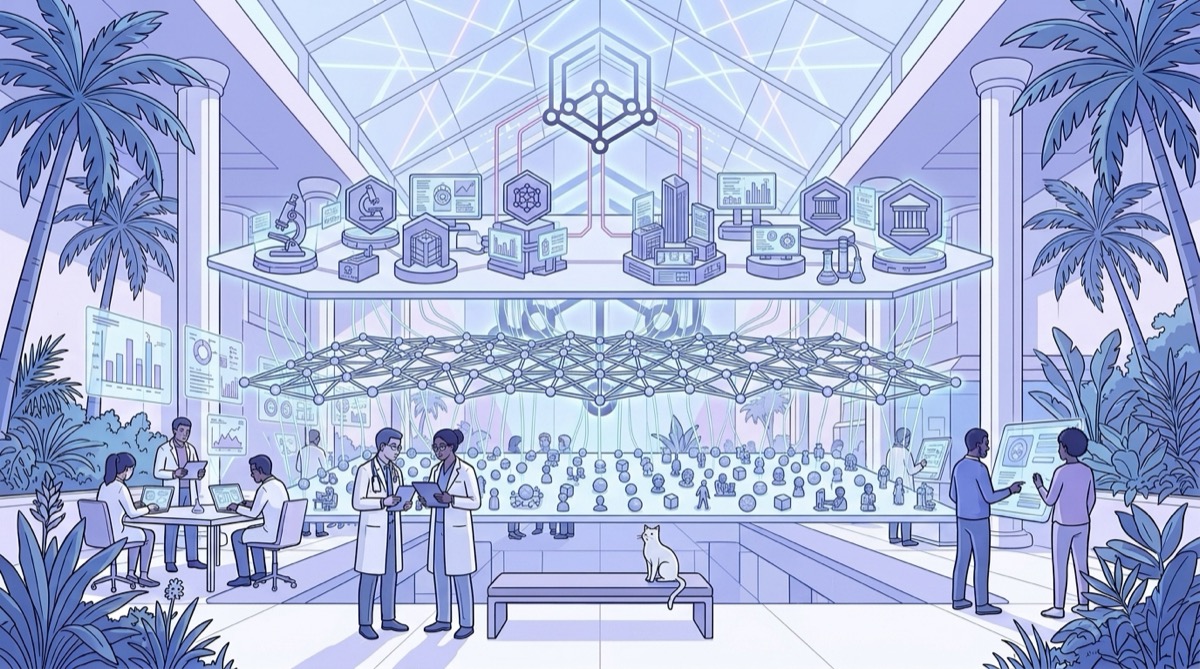
Este documento explica paso a paso cómo opera el ecosistema BSP en la práctica. Los dos protagonistas son el Desarrollador (quien construye sobre el protocolo) y el Usuario (quien vive bajo su protección). Ambos caminos se intersectan en el BEO (Objeto de Entidad Biológica).
Parte 1: El Recorrido del Desarrollador
Cómo un laboratorio, app o plataforma entra al ecosistema BSP:
- Entender el Protocolo (
bsp-spec): Un desarrollador accede a la especificación pública del BSP. Aprende qué es un BEO y cómo funciona el Protocolo de Intercambio. No se requiere registro ni aprobación. - Instalar el SDK (
bsp-sdk): Ya sea construyendo en Python o TypeScript, el desarrollador instala el SDK (ej.,pip install bsp-sdk). Puede comenzar inmediatamente a estructurar datos en BioRecords válidos y soberanos. - Solicitar Autorización: El laboratorio quiere enviar datos. Usa el SDK para solicitar autorización al usuario. El usuario firma un ConsentToken on-chain. Sin esto, la blockchain Arweave rechaza automáticamente la transacción.
- Conectar Agentes de IA (
bsp-mcp): Una plataforma de salud quiere que su IA lea el BEO. Instalanbsp-mcp(el servidor oficial Model Context Protocol para BSP), permitiendo a IAs como Claude consultar datos biológicos — estrictamente bajo el consentimiento del usuario.
Parte 2: El Recorrido del Usuario
Desde la perspectiva de una persona que vive dentro del ecosistema:
- Creación de Identidad (
bsp-contracts): La primera vez que usas una app BSP, se crea tu BEO. Las claves se generan localmente. La dirección (ej.,andre.bsp) te pertenece para siempre. - Llegada de Datos (
bsp-sdk+ Arweave): Te haces un análisis de sangre. El laboratorio formatea los datos como BioRecords y los envía. Porque autorizaste al laboratorio, los datos se cifran con tu clave y se almacenan permanentemente en Arweave. - Análisis de Vitalidad (
ava-core): Abres tu app y solicitas activamente un análisis. La app descifra los BioRecords localmente y los envía al motor de inteligencia AVA (con consentimiento de sesión). AVA procesa los datos. - El Producto Final (
sva-engine): Recibes tu Índice de Vitalidad Ambrósio (SVA) — una puntuación de edad biológica multidimensional que muestra dónde estás ganando y dónde necesitas actuar. - Asistente de IA (
bsp-mcp): Le preguntas a tu asistente de IA de salud sobre tus resultados. A través de la conexión MCP, la IA lee tus datos soberanos y proporciona insights médicos profundamente contextualizados.
Dónde se Cruzan los Caminos: Los Roles de los Repositorios
| Repositorio | Quién lo usa | Propósito |
|---|---|---|
bsp-spec | Devs, Labs, Auditores | La ley pública del protocolo. |
bsp-sdk | Devs de App y Backend | Las herramientas del constructor (Python/TypeScript). |
bsp-mcp | Plataformas de IA | Conecta agentes de IA al protocolo con consentimiento. |
bsp-contracts | Ambrósio Institute | Contratos inteligentes en Arweave (las identidades viven aquí). |
ava-core | Ambrósio Institute | Inteligencia propietaria (procesa BioRecords). |
sva-engine | Ambrósio Institute | Produce la Puntuación de Vitalidad para el usuario. |
¿Por qué está diseñado así?
- ¿Por qué el protocolo es abierto? Porque un estándar cerrado es solo un producto. Si BSP requiriera aprobación para crear un BEO, el Instituto sería un cuello de botella.
- ¿Por qué el consentimiento reemplaza la certificación como guardián? Porque una firma on-chain es matemáticamente verificable; no requiere confiar en una institución. La certificación es un distintivo de confianza, no la llave de la puerta.
- ¿Por qué la inteligencia (AVA) es cerrada? La ventaja competitiva del Instituto no es el protocolo mismo, sino la inteligencia aplicada a los datos estandarizados que fluyen a través de él.
- ¿Por qué AVA nunca tiene acceso pasivo? Porque la verdadera soberanía significa que ningún sistema analiza tus datos a menos que tú se lo pidas.